Wednesday, August 29, 2018

Recording
Once again I have been involved with teaching English to junior high school students. But this time I did not stand in front of the room and give a lecture. Remember when I told the story about my “Guanxi” experience when I first arrived in Beibei? Well because of that little adventure, I was given the opportunity to do some voice recording. Students at a junior high school in the Beibei will be learning English in their classrooms to Diana’s (another English teacher from CSBSJU) voice and my voice. The recording took about five hours total and we were able to record forty lessons in total (five tapes worth).
When we arrived at the studio on a Saturday and we pretty much immediately got to work. I grabbed a cup of hot green tea to keep my mouth from drying out and then sat down in the recording room right in front of a microphone. Reading in front of the microphone was very easy; I just had to speak slowly, clearly, and with emotion (try to make it sound more natural). I did make a few mistakes every once and a while but overall I did a pretty good job I think. At the end of the first day of recording we had finished twenty five of the lessons. The next day we finished up the recording and experienced nothing new.
When we finished the recording, I was finally able to listen to my voice; I don’t think anybody likes the sound of their own voice. My voice sounds completely different when I am listening to it than when I am speaking. But if the teachers at the junior high school thought that the sound of my voice was good enough that means my voice must be just fine. Overall I had a very fun time and I was told that I might have the opportunity to do some more recording in future. I’ll keep my fingers crossed.
The Toilets in China are Different
Maslow's hierarchy of needs is often portrayed in the shape of a pyramid, with the largest and most fundamental levels of needs at the bottom, and the need for self-actualization at the top. You cannot not reach the higher levels of the pyramid without fulfilling the lower ones first. The part of the pyramid that I am stressing here is the physiological part; more specifically excretion.
In America we have public toilets everywhere so you don’t have to stress out or worry about what to do when nature calls. Every public restroom will have privacy, have toilet paper and have a sink to wash your hands. I don’t mean to put the American public restroom system on a pedestal; I have experienced my fair share of dirty, stinky and scary public restrooms in America. But of all of the dirty, stinky, and scary public restrooms I have experienced in America, none have prepared me for public restrooms in China.
In China the idea of a toilet is completely different. You don’t sit down and relax while you do your duty, you have to squat over a porcelain hole in the floor (the dreaded squatting toilet). I don’t know about you but I find it very difficult to relax in that squatting position even if I am using facilities that have burning incents, calming tradition Chinese music playing in the background, and beautifully decorated stalls (my hips and knees are just not used to it). Even becoming comfortable with using a squatter in a nice environment like the one that I just described, is difficult. I used to have nightmares about using squatting toilets (not really, but I definitely avoided them like the plague) and that didn’t change until I brought myself to the brink of disaster. Sometimes you eat something that your body just doesn’t agree with and your body will spring into action (out of the blue) and give you the five minute countdown to find a toilet or else…… I could be ten or fifteen (or longer) minutes away from home (my beloved western style toilet) and refuse myself to use a nearby squatting toilet and hike all the way back to my apartment (I would not suggest doing so). Like I said, my fear of using a squatter took me to the brink of disaster before I finally gave it a try.
Now even though you may have become comfortable with using squatting toilets doesn’t mean that you have gotten comfortable with public restrooms. It is very important to remember which public restrooms are nice and which ones look like and smell like a sewage tank. You don’t want to be forced to use a public restroom that smells like ammonia so bad that it burns your nostrils and makes you eyes water or one that doesn’t have flushing toilets. Just the environment of a public restroom can give you nightmares that continue to scare you away from ever using squatters. When learning to become accustomed to squatters, it is wise to purposely go to places that have very well kept restrooms (like at a nice café or restaurant).
After becoming accustomed to using squatting toilets I have come to understand the reason of their design (I have allowed myself to rise to a higher region of Maslow’s pyramid!). When you use a squatting toilet, you are not touching anything (except for your shoes on the ground) so it is cleaner. Can you imagine using western style toilets in an over populated country like China (kind of gross if you ask me)? Anyway, when you visit China, the sooner you can get over your fear of using a squatting toilet, the sooner you can start enjoying yourself by allowing yourself to rise past the bottom region of Maslow’s hierarchy of needs. Just have patience and an open mind and everything will be more enjoyable.
Monday, January 30, 2012
There is Not a Whole Lot to See in Shanghai
When it comes to seeing Chinese culture in Shanghai, there isn’t really that much to see. Shanghai is more of a modern city and there are no famous city walls or palaces to see. When you come to visit Shanghai you come to see its modern marvels and historical sites that mostly date back to the 1900s. Jess and I were able to see all that we wanted to see in the city in just two days.

On day one of sight-seeing in Shanghai we first went to see the Jade Buddha temple. It is a temple in the downtown area of Shanghai that has a beautifully carved, jade Buddha statue. We were allowed to take photos of the temples but not of the jade statue. The temple’s religious ceremonies and tourist activities are organized by the many Buddhist monks that live in the monastery. It was very neat to see that this temple was still in use.

After leaving the temple we took the subway to one of the city centers along Nanjing Rd to experience all of the shopping malls. It reminded me of pictures that I have seen of New York City with all of the foreigners, western restaurants and shops, skyscrapers and big screen TVs. After that we walked down the road until we got to Shanghai’s famous waterfront. On one side of the river there is the Bund, which contains old skyscrapers from the early 1900s and on the other side there is the Pudong Skyline. The Pudong Skyline has Shanghai’s modern skyscrapers, some of which rank among the tallest in the world.

Lastly we went to another famous area in Shanghai called the Old city which contains the Yuyuan Garden and a Ming dynasty style bazaar. The garden was a beautiful example of on old traditional Chinese garden with many coy ponds, and great pieces of Chinese architecture. The bazaar was also a lot of fun. There were many different types of food that you could buy and eat off of a stick and there were countless shops to buy souvenirs from. We really enjoyed Old Town because it had character and a festive atmosphere.
On day two of site-seeing we walked around in the French Concession and were able to see the building where the first Communist Youth League was started. Other than shopping malls, there wasn’t too much to the French Concession (at least of what we were able to see) so we didn’t stay there too long. We next went to a major shopping mall back on Nanjing Rd to do some bargain shopping for fake goods and were able to get Jess some souvenirs for her family members.

Then after that we got back on the subway to go to a station that was near an old Spanish church in the old part of the city. Finding this place was a bit of a task because we kept getting lost and its location was in the middle of where the local lived. Eventually we found it and went inside. It kind of reminded me of home because I had not been inside a church in being at home in Wisconsin. It was a little tough getting back to a subway station to get back to Reid and June’s apartment, but we still made it back in time for dinner. The next day we said our goodbyes and then took a bullet train to Beijing.
Over all Shanghai was good to see so I could better experience China’s skewed money distribution, but other than that, there wasn’t too much to see. And it was good to get to know Reid and June.
Sunday, January 29, 2012
Arriving in Shanghai

Shanghai is one of China’s most populated and developed cities. Historically Shanghai has been one of the major port cities for foreigners to visit and do business. Even today Shanghai is still the most favorable port for international business interests. Also many travelers from all over the world come to Shanghai to see its famous skyline and witness how western culture has influenced it.
Jess and I arrived at the Shanghai Hong Qiao Airport at midnight. Since it was too late to use the subways, we had to take a taxi to our hostel (The Rock and Wood International Youth Hostel). Immediately after exiting the airport a man came up to me telling me he was a taxi driver and wanted to know where I was going. After telling him where I wanted to go he very quickly told me his price was two hundred Yuan. I thought this was strange so I walked away from him and then he lowered his price to one hundred and fifty Yuan. I still thought that his price was too high so we waited in the taxi line to try a different taxi. I ended up only paying seventy Yuan for the taxi ride to the hostel. I later learned that unlicensed taxi drivers try to take advantage of tourists at the airports. After we paid for our room and dropped our bags off, we went out to see if there were any restaurants open at two in the morning so we could get something to eat. After finding a restaurant and we ate some Kung Pao Chicken and then went back to our hostel to get some sleep.

The next morning we were able to have a very nice American style breakfast and then set out to the subway station to head over to Reid and June’s apartment. This was Jess’s first experience with subway systems. We arrived at their apartment in the early afternoon and were welcomed by their Ai Yi (maid). Then we waited for Reid and June to arrive home from work by going to a Carrefour Supermarket to walk around in. That night we ate a delicious dinner that their Ai Yi had prepared for us, drank some wine and talked about China.
We went to bed pretty early that evening because we were going to wake up early the next morning to do some sight-seeing.
Monkey Island
 The most memorable day trip that we took during our vacation in Sanya was our visit to Monkey Island. Monkey Island is quite literally an island full of monkeys that live in a nature reserve that is open to the public. This story is another example that sometimes nothing seems to go to plan in China.
We left our hostel (Peter, Jess, and I) after lunch to walk to a bus station so we could catch a ride up to Ling Xue so we could go to Monkey Island. It took us about an hour and a half to find the station because we kept getting lost. When we got there the bus station was in pretty bad shape; smelled like gasoline, exhaust, sewage, and cigarettes. Luckily we only had to wait inside for about ten minutes after purchasing our tickets to board the busses. We arrived in Ling Xue after about an hour and a half of driving and started to look around for another bus that would take us to Monkey Island. We couldn’t find the bus that we needed, so instead we crammed into the carriage of a motorcycle taxi. The forty five minute ride was both pleasant and unpleasant. We seemed to hit all of the potholes in the road even though I could tell the driver was doing his best to avoid them. The air we were breathing was a combination of fuel exhaust from the motorcycle, dust from the road and whatever rural China smell was alongside the road. But we did get to see what most of China (rural and poor) is really like; pigs, chickens, ducks, and gnus roaming freely, lots of demolished buildings and small farm plots. I kind of enjoyed the ride, but unfortunately for Jess, the ride did not help her migraine head ache that she had acquired earlier in the day. By late afternoon we arrived at the entrance to Monkey Island.

We were not too pleased with the price of the entrance tickets once we had arrived, (25 US dollars per person) especially after what we had to go through to get there. What they are doing is smart; after traveling all the way out in the middle of nowhere they force you to pay a lot of money. Despite the high price we tried to enjoy our experience at the park. To get on the island we had to take a spectacular cable car ride that looked out over a beautiful ocean view.
 Monkey Island has tons of monkeys and almost none of them are actually in cages. Part of the fun is trying to get as close as you can to the monkeys and take a good photo without making them feel too uncomfortable. Since the monkeys kept going after Jess, Peter and I had to keep scaring them off. Unfortunately we had arrived so late to the park, so we were only able to stay there for about an hour and a half before it closed. Now we were going to have to figure out how to get back to Sanya.
 We waited outside of the park for a bus that may or may not come to bring us back into Ling Xue but no bus came. We started walking up and down the road asking random Chinese people where a bus was but they would each point us in a different direction. Eventually we asked a motorcycle taxi where the bus was and he told us to get in. He drove us directly to the bus that we needed after driving us around for a little while. The bus was an old rickety piece of machinery but we didn’t really have any other choice. The bus winded its way back to Ling Xue, stopping at severs places in the countryside to drop people off. We were very relieved to arrive in Ling Xue again, but to add to our imperfect day, we discovered that the bus station was closed. How were we going to get back to Sanya? What we had to do was find a taxi (which was rare in this town) and haggle a driver down to a reasonable price to bring us back to Sanya. After finding a driver, we haggled him down to $33 to drive the three of us the hour and a half drive back to Sanya. When we got back to our hostel I needed to drink a couple of cold Tsingdao beers to finally relax.
What a day! Even though nothing seemed to go right, and Monkey Island was not worth the amount of money we had to spend on it, I still enjoy looking back at this adventure.
Friday, January 27, 2012
Arriving in Sanya
Finally after submitting grades and celebrating Christmas in Beibei, it was time to start doing some traveling. The first destination was Sanya, a city on the southern tip of the island of Hainan located in the South China Sea. We started our journey by going to China’s tropical paradise. (December, 27th)

After packing our bags, Jess, Peter and I set out to the Chongqing airport to begin our adventure. After two and a half hours of flying, we finally landed in Sanya. Immediately after getting off of the plane I started over heating because I was still wearing my several layers of clothing. Eventually I was able to change into warm weather clothing after we picked up our bags. Then we headed out to find our hostel, Joes Seaside Inn. We chose this hostel because of it low price (13 dollars per private double room per night) and because the owner was quite knowledgeable and helpful with going to visit places. By using his help and advice we were able to visit a couple of places within and outside of Sanya.

On our first day, we just explored the near-by beach where the local people visited, and then walked around to get a good idea of what was around the area. Sanya, just like cities in Chongqing is going through quite a bit a of development. But, over all the beaches in Sanya were our favorite. There were the beaches that the local people went to exercise wushu in the early morning and evenings, dance at sunset, sunbathe in the sand during the day, or just take a stroll. Our favorite beach was in a tourist area called Da Dong Hai. In Da Dong Hai you could either find spot on the sand to lie down or rent a thatched umbrella with a folding beach chair. For a couple of the days we would just go to this beach and find a nice piece of sand to lay our towels down on, get a cold beer or a fruit smoothie to drink and then just listen to the waves as we soaked in the sun. Why would anyone want to leave here?
Sanya was just was I needed after finishing a long semester of teaching, but after staying there for a week, we departed to Shanghai to stay with some relatives of mine (my brother in law’s aunt and uncle) who are teachers at Shanghai American School. I hope to someday come back to Sanya.
The Holidays in Beibei
Celebrating the holidays in China are a little different celebrating them in the United States. The biggest problem when it comes to celebrating the holidays is the lack of certain food items and other decorations that you might need. But, that lack of certain items is what makes celebrating the holidays in China memorable. The adventure of finding what you need from the store or being creative and making substitutes is all part of the fun.

Thanksgiving was the most difficult Holiday to celebrate in China because it requires a lot of cooking and many of the food items that we consume in the U.S. either can’t be found or require planning way in advance and a lot of money. So to prepare for the big meal, the Foreign Students Office transported me and the rest of the English teachers to a big supermarket in Chongqing called Metro to buy what we needed. We were able to find everything but cranberry filling and a turkey. Not having a turkey wasn’t so bad, we decided to substitute some roast chickens and ducks that could be bought on Thanksgiving Day. The food situation was figured out.
We still had classes to teach on Thanksgiving, so we did not have the luxury of having the full day to cook and prepare for the big meal. But, because everyone had split up responsibilities for cooking or acquiring certain dishes, the feast was organized on time. This was the most diverse Thanksgiving dinner I had ever consumed. We had stuffing, gravy, rolls, roast duck, roast chicken, some Indian dishes (cooked by a Pakistani teacher), roasted sweet potatoes, mashed potatoes, rice porridge, and carameled apples. It was quite a feast.
 Celebrating Christmas in China wasn’t too difficult, the Christmas season had arrived in Beibei. All of the shops, supermarkets, etc….. all had Christmas decorations, Christmas music and staff dressed in Christmas outfits. I had never seen Christmas in Beibei before. When I studied abroad in Beibei two years ago I couldn’t even tell that Christmas was around the corner. From my understanding, Christmas is the new fad in China (at least in rural China now).
To celebrate Christmas Jess (my girlfriend remember) and I started the day with a nice breakfast and then opened the Christmas presents that we got each other and then presents that my mom sent both of us. Then we relaxed for the rest of the day watching Christmas movies. In the evening Jess and I participated in a Secret Santa get together with many of the other teachers in our building and then went out to eat a fancy Chinese meal.
It is easy to get home sick during the holidays (I have experienced my fair share of it) when you don’t have your close friends and family around. But, celebrating the holidays in China has allowed me to get away from tradition a little bit and make some unforgettable memories.
Wednesday, January 18, 2012
Final Exams
After experiencing giving final exams to my students at the end of the fall semester, I decided that I would not give final exams during spring semester. Now before you start thinking I am a lazy teacher or something, I will tell you what happened. So remember that weekend excursion that I went on with the other foreign teachers and Chinese professors? I was able to have many of my questions concerning the final exams answered during that time. What I found out was not very uplifting.
To start things off, I found out my Oral English class is only worth ten percent of the total English grade of each student (that explains why I only have a twenty five percent class attendance). So by estimates I should have about four hundred students combined in my eight classes that I teach. WOW! That means I have to give about four hundred oral exams within one week. So I asked questions concerning time and space to be able to give all of the exams. Can we have a room reserved for each of us to take these exams? Can we have students use class time, lunch time and the early afternoon to take their exams? These requests were simply out of the question (there goes my idea of a three minute final per student). We got laughed at when we asked for a reserved room and my question concerning using out of class time to give the exams was answered with another question “But when will the students be able eat their lunch and take their nap?” At this point it really dawned to me that we were not being taken seriously by anyone so I was not going to give a final exam that could be taken seriously. So I decided to give each student a one minute oral final exam with me. It was the only way I could get through all of the students within the class periods. It was a bad idea.

Now the final exam was only sixty percent of the total grade and the remainder was class attendance. So how was I going to remember the students who have either shown up to class all of the time, most of the time, some of the time, or never. All I could do was estimate because we were never given a class list for any of our classes. I knew I was going to see many unfamiliar faces and the best I could give them was a D if they completed the final exam. I thought I was very fair. I gave better grade to students I recognized and I only failed students who did not show up for the final (I wouldn’t know who they were otherwise), if they didn’t complete the final, if they couldn’t understand my very simple questions or if they just were silent beside the occasional “umm”. I have some very memorable examples of each.
There were only a couple students who did not complete the final exam. One student tried to recite a paragraph that he had memorized (very commonly occurred by many students who all tried to talk about their hometown) but had run out of material after thirty seconds. I tried to engage him in conversation by asking him simple questions but he just didn’t understand anything that I said. He would just respond with, “Thank you teacher, bye bye”. Eventually he walked away from me even after I told him that he had not finished the exam. Another student who walked away from me was a very weird fellow. He was one of my students who would just use my class as a study hall and would try to pretend that I was not there when I would try to get him to talk. During his exam he spoke gibberish for twenty seconds before stopping mid-gibberish, twitched his neck and then stormed out of the building after a brief second of awkward silence.
I also did have some fun with the students who would stick around for the full minute but would only recite a short twenty second speech about their hometown. I would try to help them by asking them simple questions about their home time like, “What is the food like”, or “what is famous in your hometown?” But usually they would just stare off into the corners of their eyes in silence or mumble “na’ge…….na’ge……” (“um” in Chinese).
Like I said earlier, giving a one minute oral final exam to four hundred students is a bad idea. I had to have the oral exams be taken outside the classroom in the freezing cold hallway (and usually I was for 60-90 minutes at a time before I got through all of them). Also giving determining sixty percent of someone’s total grade based off of a one minute oral exam is ridiculous. I have decided that I will not give a final exam next semester, but instead I will make attendance the one hundred percent of the grade by randomly taking attendance.
Since submitting grades I look back at this experience I see both agony and humor. I also now have a tremendous amount of respect for college professors.
Lil Minnesota Comes to China
 Saying goodbye to friends and family before leaving to live in another country for an extended period of time can be very difficult, but saying goodbye to your girlfriend can be even more difficult. Friends and family will always be there for you when you return, but can the person that you are in a relationship with do the same? Long distance relationships tend to have very low success rates, but on the positive side, that is the only kind of relationship that I have known with my girlfriend Jessica (Jess). Ever since we started dating our relationship was a long distance one. She went to college four hours away from mine and her home in Shoreview, MN is four hours away from my home in Ashland, WI. Every time we got together we would go on a trip somewhere or put together an itinerary to maximize our stay with each other. Now since I have moved even farther away to live in China, our relationship has really been put to the test. We would have to go three and a half months before we could be together again. So we made travel arrangement for her to come and visit me so we could travel around China together. Finally the day of her arrival, December 14th had finally come around and I needed to go to Chongqing to pick her up at the airport.
Going to the airport by myself was going to be interesting. I had to take one of the last busses leaving Beibei to Chongqing, get off at a specific bus stop, and then find a taxi to take me to the airport. A Chinese friend of mine taught me a couple of useful phrases to help me along my journey, such as “Driver please tell me when we have arrived at Jia Zhou Hua Yuan”. Eventually I arrived at the airport but had four hours of waiting to do before she would arrive, so in the meantime I camped out in the airport’s KFC to eat a snack and played games on my laptop. Finally, at 1:45am, she walked through the terminal where she found me waiting (if you want to know the romantic details just ask Jess or me in person). Getting back to Beibei was quite the journey too. We had to take a bus to a specific bus stop to catch a taxi to bring us back to Beibei. We arrived back at my apartment at 2:30am.

Finally our China adventure together had begun and with the starting point being in Beibei. I still had a week of teaching to do (finals week) when Jess arrived but this gave her a good opportunity to experience where I lived and get a little bit more acclimated to being China before we departed.
Tuesday, January 17, 2012
The Weekend of Answers
The end of the semester is approaching and already I am having flashbacks of finals week at St. John’s; long hours spent studying in the library and few hours spent sleeping. And this year I am giving final exams to all four hundred sum graduate students. Just like my lack of experience in teaching, I have no experience giving final exams (no guidance here either). So I began emailing several Chinese faculty and asking a lot of questions (December 5th-9th).
When do I have to give final exams to the students? What format do I have to use for the final exams? When do I have to have final grades turned in? When am I free to leave for vacation? What resources are available to me for the final? I sent several emails to different people trying to find out some answers (this is the second week of December already). Basically I was not able to get any questions answered because nobody knew what was going to happen for the rest of the semester yet. Talk about frustration! How can I start planning for my winter vacation when I don’t even know when finals are? St. John’s or any other University in America would have had the whole year planned out way ahead of time. Even though I was unsuccessful in finding any answers through emails I was not totally left high and dry. What I found out was that the foreign English teachers and I were going to go on a trip to Wu Shan with some of the other Graduate Chinese Professors during the weekend. I was told to bring a change of clothes and my passport because we would be staying overnight. Somewhere, at sometime during the trip I was told I would finally get some answers.
It was 7:00am on a Saturday morning and there I was standing and waiting for a bus to pick me and the other teachers up from gate number six. We had no idea what was going to happen during this weekend’s get-away with the other professors. All we could do was follow along and hope that we get some answers.

Shortly after boarding and finding our seats in the back the bus departed and a tour guide began to speak into the microphone. I wish I could tell you what she said (If I could have, this story about my weekend trip would be a lot less exciting). Soon after she finished speaking she handed out itinerary sheets and then sat down. It did not matter that we were able to get one of the itinerary sheets in the back of the bus because like the tour guide, the sheets were in Chinese. We would continue on with the trip not knowing details. After driving for four and a half hours we finally stopped at a small town along the Yangzi River to eat some lunch at a restaurant. At lunch we found out that the next stop in the trip was a famous temple that was about thirty minutes down the river.
 When we arrived at the Zhang Fei temple I noticed something about it just didn’t look right, it didn’t look like it was 1,700 years old. Apparently the whole temple and its relics were relocated about fifty meters up the hill in order to preserve it from the rising waters levels of the Yangzi caused by the Three Gorges Dam. The temple was kind of interesting but, most of it looked new and I couldn’t read or understand anything. After spending about an hour at the temple we boarded the bus and were back on the road again for two more hours of driving. Soon after arriving we checked into a hotel and then gathered into a large conference room to discuss issues that came up during the semester and answer any questions that me might have (it’s about darn time!).

The meeting was very comical (at least to me) and different from any kind of conference meeting I had ever participated in. The meeting began with one of the administrators giving a long welcome speech followed by some speeches of a few other faculty members (all spoken in Chinese of course). While these speeches were going I had to keep myself from smirking because for one, I can’t understand anything in their long speeches, and two, there was a very entertaining show of several people trying to figure out how to solve the microphone technical difficulties in an environment that didn’t need microphones (no one knew what they were doing). When the speeches were finished everyone in the room split up into three small discussion groups to discuss any issues that had come up during the semester. Finally we had our questions answered. Following the meeting was dinner at the hotel and then a short trip to a shop to buy snacks for our early morning the next day.

I began the day at four thirty in the morning to embark on our next part of the trip to an unknown destination to do any unknown activity. We loaded up onto the bus and headed out on the road again. After a couple hours of driving we arrived in a town called Wu Shan. There, we would get on a ferry and travel up the Yangzi River to a part of the Three Gorges. The river there was quite breath-taking. The sun was shooting beams of light through the gray clouds and burning away the morning mist. Being a major river, the Yangzi is a major shipway for cargo ships and cruise ships. Did you know that the Yangzi is so deep now because of the Three Gorges Dam that you can take a large cruise ship all the way from Shanghai to Chongqing?

Eventually we got crammed onto a medium size ferry and headed down the river. Despite it being cold, I wondered up to the viewing deck and was fortunate enough to get a window to take pictures from. We passed underneath a massive red arched bridge and passed by many cargo ships, and small towns. After about an hour and a half we disembarked at the Three Gorges to do some “hiking”. I say hiking with quotation marks because I am used to hiking in the United States where you hike in the wilderness, walk on soil and are relatively alone when you do so. Here, hundreds of people are funneled onto a stone stairway that is two persons wide (more like standing in line if you ask me). I did not hike to the top because I was too impatient to deal with the congested trail. To return we took a ferry to the bus and then drove for nine hours back to Beibei.
Even getting simple things in China such as buying a pair of shoes is not easy in China. It kind of takes the fun out of it when you can conveniently buy everything you need at one location (like at Walmart or Target). Here, everything requires a journey and leaves a good story to tell.
Tuesday, November 29, 2011
Learning Chinese is a Piece of Cake…….
 The alphabet was invented by the Phoenicians thousands of years ago. The alphabet teaches you the basic sounds of a language so you can apply them in reading, writing and speaking of a language. Gaining knowledge by applying basic concepts is how we are taught in schools in America (western thought). In Chinese there is no alphabet so you have to learn the language in a different way; lots repetition and memorization. But how are adults from the western world supposed to do that?
The Chinese language is a very ancient language. Its modern written language comes from pictographs that have evolved over thousands of years so there is no alphabet. Having no alphabet makes learning Chinese one of the most difficult achievements in the world. If you want to sit down and read a newspaper in Chinese, you have to know on average a minimum of two thousand four hundred different characters. Now how does a person who has been educated using western thought learn that many characters when there is no alphabet? Step one; learn how to learn Chinese.

If you think you can memorize several thousand characters with flash cards, be my guest because you can only get so far before the brain reaches its limits and then starts to forget. Of course there are some basic characters that you have to memorize in the beginning (and it will be as familiar as a bunch of scribbles). These basic characters are important for learning most of the rest of the characters. Simple characters such as the character for wood 木 for example. When you look at it and use your imagination you can see a tree with roots (stick figure tree). Even just training your mind to use your imagination allows it to organize and make sense of the basic characters. When you have memorized the basic characters you can start to learn the more complex characters. Now you are applying your western style of learning to a language that has no alphabet.
Learning the complex characters takes more time than the basic ones. Now you have to apply basic concepts that you learned but you also have to memorize quite a bit still. Complex characters are composed of basic characters called radicals. Like the character for chair 椅 has the radical for wood on the left side of the character. This shows that wood has something to do with the character; when you picture a chair in your mind is it made of wood? You can learn Chinese when you can make some sense of it. Step two; find an outlet to learn Chinese from.
 I have been studying Chinese for two and a half years now and still have a very difficult time finding an outlet of which to study Chinese at my skill level. Here in Beibei the university has provided us with a Chinese teacher to teach us introductory Chinese. I have learned introductory material in a classroom setting three times now (which does me no good). I am at an intermediate level and need more than what that class provides. I have thought of a few ideas; read children’s books and get tutored by some of my Chinese friends while I teach them English. Also it helps being immersed in the language by living in China.
Isn’t it amazing how you can distinguish how people learn knowledge based off of how they learn their language? Whether it is applying basic concepts (western thought) or memorizing all concepts (Chinese). We shall see how I progress as I continue to learn this language. Every day I can read more on the restaurant menus and street signs and the people become more understandable. Piece of cake right?
Monday, November 28, 2011
Burgers and Fries to Replace Stir-Fry and Rice
 During the summer of 2010 my sister and I drove from Hattiesburg, Mississippi to our home in Ashland Wisconsin; I had just finished a summer internship at the University of Southern Mississippi. During the long 20 hour drive we traveled through Mississippi, part of Tennessee and Missouri, Illinois and Wisconsin. When we entered the state of Illinois, we set sail into the endless sea of corn fields. It’s a pretty boring drive when all you see is corn on the side of the road. But isn't it also amazing? Corn is the crop that feeds our industrialized food system.
 During the Chinese National Holiday I traveled to Chengdu China by fast train and was able to see much of the Chongqing and Sichuan landscape along the way. The first thing that struck me was that there was no endless sea of corn and there were no large scale farms. The hilly and mountainous landscape was dotted with small farming plots which all seems to be taken car of by different people and had many different crops growing in them. Seeing this gave me a good idea for a class lecture. I wanted to know what my students thought about using the industrialized food system in China.
First I showed my students the documentary film Food Inc to give them a good all around view of the way food is made in an industrialized system (the movie certainly makes you think more about where your food came from). Then in the class following the movie we discussed what answers they came up with to this question, “Should China ever adopt the industrialized food system so as to independently feed its large population?” Over all the results were about half and half for adopting or rejecting the food system. The main argument for adopting the food system was to help overcome feeding the large population independently even though the consequences were great. The arguments rejecting the food system were many. Students used arguments stating environmental problems, emigrational problems, cultural problems and health problems. None argued for human or animal rights (kind of a touchy subject here in China).
 Yes the industrialized food system is great. We Americans are able to spend less of our annual budget on food than most people in other countries around the world. Our grocery stores don’t have seasons anymore, and they have an average of forty thousand different products to choose from. One of our major exports is food because we can produce so much of it so cheaply. Other countries cannot compete with our food system. For example, think about how widespread McDonalds is in the world. McDonalds is everywhere (over 31,000 restaurants in 119 different countries world-wide). Go America! Right? Also keep in mind many Americans don’t know how to cook, can’t afford to cook healthy food, don’t eat together as a family and have some sort of health problem related to their diet. And don’t forget the large carbon footprint and all of the human and animal rights violations that are created by manufacturing this super cheap food.

Personally it makes me feel disgusted when I see a McDonalds in the Forbidden City in Beijing or KFC in downtown Beibei. American fast food restaurants don’t belong in China and frankly neither does the American industrialized food system. Chinese food is a big part of Chinese culture; culture that comes from how the food is grown, processed, cooked and then eaten. China is already losing a lot of its culture by being on the fast track to modernization. Why should burgers and fries replace stir-fry and rice? With an industrialized food system already in America, I wonder what food-related culture we Americans have lost (how food is grown, processed, cooked and eaten).
Sunday, November 6, 2011
The Toilets in China are Different
Maslow's hierarchy of needs is often portrayed in the shape of a pyramid, with the largest and most fundamental levels of needs at the bottom, and the need for self-actualization at the top. You cannot not reach the higher levels of the pyramid without fulfilling the lower ones first. The part of the pyramid that I am stressing here is the physiological part; more specifically excretion.
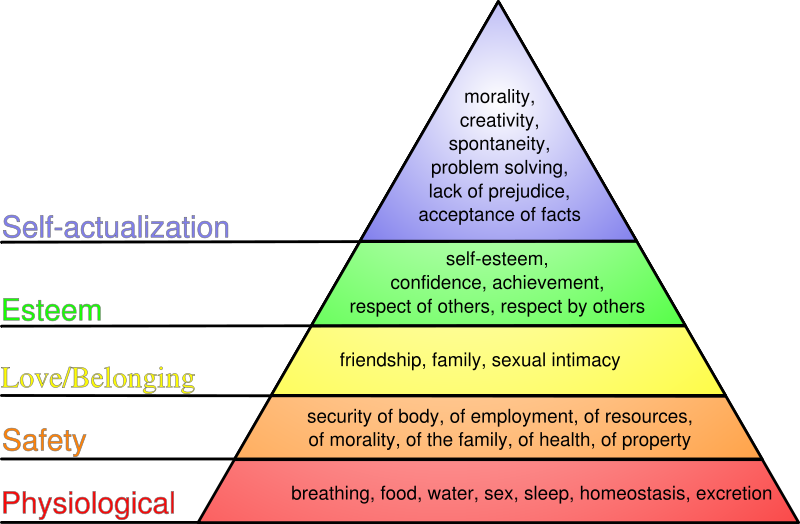 In America we have public toilets everywhere so you don’t have to stress out or worry about what to do when nature calls. Every public restroom will have privacy, have toilet paper and have a sink to wash your hands. I don’t mean to put the American public restroom system on a pedestal; I have experienced my fair share of dirty, stinky and scary public restrooms in America. But of all of the dirty, stinky, and scary public restrooms I have experienced in America, none have prepared me for public restrooms in China.
 In China the idea of a toilet is completely different. You don’t sit down and relax while you do your duty, you have to squat over a porcelain hole in the floor (the dreaded squatting toilet). I don’t know about you but I find it very difficult to relax in that squatting position even if I am using facilities that have burning incents, calming tradition Chinese music playing in the background, and beautifully decorated stalls (my hips and knees are just not used to it). Even becoming comfortable with using a squatter in a nice environment like the one that I just described, is difficult. I used to have nightmares about using squatting toilets (not really, but I definitely avoided them like the plague) and that didn’t change until I brought myself to the brink of disaster. Sometimes you eat something that your body just doesn’t agree with and your body will spring into action (out of the blue) and give you the five minute countdown to find a toilet or else…… I could be ten or fifteen (or longer) minutes away from home (my beloved western style toilet) and refuse myself to use a nearby squatting toilet and hike all the way back to my apartment (I would not suggest doing so). Like I said, my fear of using a squatter took me to the brink of disaster before I finally gave it a try.

Now even though you may have become comfortable with using squatting toilets doesn’t mean that you have gotten comfortable with public restrooms. It is very important to remember which public restrooms are nice and which ones look like and smell like a sewage tank. You don’t want to be forced to use a public restroom that smells like ammonia so bad that it burns your nostrils and makes you eyes water or one that doesn’t have flushing toilets. Just the environment of a public restroom can give you nightmares that continue to scare you away from ever using squatters. When learning to become accustomed to squatters, it is wise to purposely go to places that have very well kept restrooms (like at a nice café or restaurant).
After becoming accustomed to using squatting toilets I have come to understand the reason of their design (I have allowed myself to rise to a higher region of Maslow’s pyramid!). When you use a squatting toilet, you are not touching anything (except for your shoes on the ground) so it is cleaner. Can you imagine using western style toilets in an over populated country like China (kind of gross if you ask me)? Anyway, when you visit China, the sooner you can get over your fear of using a squatting toilet, the sooner you can start enjoying yourself by allowing yourself to rise past the bottom region of Maslow’s hierarchy of needs. Just have patience and an open mind and everything will be more enjoyable.
Tuesday, October 18, 2011
Like a Can of Sardines
Chongqing province has one of highest population densities in the world (350.1 people per square km) and has a population of about 30 million people. The city of Chonqing has a population density of about 380 people per square km. This high density is caused by the fertile (many farmers) and mountainous terrain of the area. This is a huge difference from the small population density of my home in Ashland County (about 26 people per square km).
Southwest University is a very large university. Its’ student population is about fifty thousand undergraduate students and about fifty thousand graduate students and it takes me about forty five minutes to walk from one end of campus to the other. I teach in a building (teaching building #8) that is near the center of campus and it takes me about thirty minutes to walk there so I ride a campus shuttle every morning to get there. The shuttles are very convenient because they only cost one Yuan to get on and get to your destination. However, since the drivers don’t pay much attention to safety, they tend to pack as many people as they can on the shuttle (like a mobilized can of sardines).
 Every morning I walk from my apartment to the bus stop at Gate Six and then wait for the shuttles. Almost as soon as the shuttles arrive, a large group of grandmothers and grandchildren suddenly appear and jump on to the shuttle before paying. I always get so frustrated when this happens. I arrive early and stand in line (what I think is a line) so I can pay and then get on the shuttle. Lines are kind of a myth in China; more a mob style of organization is used instead of lines. Sometimes I get so mad I picture myself grabbing some of the grandmothers and grandchildren and then throwing them out of the shuttle so I can sit in a seat that I waited and paid for (don’t worry I said “pictured” myself doing). Sometimes it doesn’t matter if I get a seat because I will end up having someone sit on my lap anyway. These shuttles have fourteen seats (driver’s seat included) so there should be no more than thirteen passengers right? Wrong! Remember when I said that the drivers don’t pay much attention to safety? One morning I can remember a very industrious driver packing twenty seven passengers onto the shuttle. That morning I was sitting on my friend Ryan’s lap (and he is a big guy) and my head was cocked to the side to avoid hitting my head on the roof of the shuttle. Also I remember seeing many faces of amazement from many passing by students while we rode the shuttle to class that morning. This is the kind of life I have to get used to.
I am amazed with how people in Chongqing are so accustomed to living in an area with such a high population density. Heck I am amazed that all of China is accustomed to living like this (not like they have a choice though). It’s packed like a can of sardines over here.
Friday, October 7, 2011
National Holiday
Sometimes when you make plans they don’t completely go to plan and sometimes nothing goes to plan. When I tried going on a trip to Chengdu China to celebrate the National holiday, nothing went to plan.
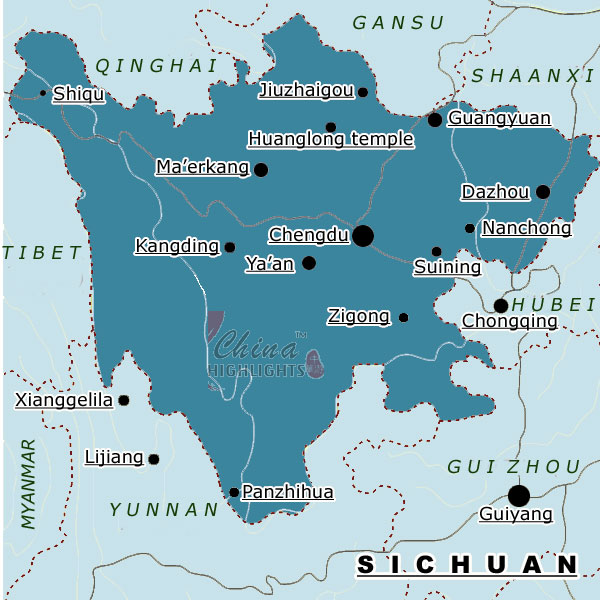 Our misfortunes began when we tried to book a hotel through Hostel World (which I would not suggest). We booked two twin suites at the Inn Barsby Hotel in the downtown area of Chengdu and had to pay a ten percent reservation fee of thirty dollars. The next day we purchased our train tickets in downtown Beibei. Unfortunately we were not able to buy tickets to arrive on the day that we were supposed to check in at the Inn Barsby Hotel. This didn’t seem like too big of a problem until I realized that I couldn’t contact the hotel by phone or email. So we were just going to have to show up and try to explain the situation at the check-in desk. We left for Chendu on a Monday morning train from Chongqing, so we had to take a bus from Beibei to Chongqing.
We arrived in Chengdu East Train Station and only had a vague idea on how to get to the hotel, which was all the way over on the west side of the city. So we just took an hour long bus ride from the train station to the bus station. When we got there we were lost, other than knowing that we were on the west side of the city. Fortunately we met some very nice Chinese girls who wanted to take pictures with us and helped us buy a map and flag down a taxi to take us to the Inn Barsby Hotel. When we arrived to the hotel, the manager at the check in desk told us that they no longer do bookings through Hostel World so we had no reservation. This is where the stress really set in. We were in Chengdu and had no place to stay and could speak very limited Chinese. Two blocks away from the Inn Barsby Hotel we found another hotel that had rooms for us to stay in. After looking at the rooms (show rooms) we decided that we should stay there because we probably didn’t really have any other choice. We paid for two rooms (150RMB per person per night).
 When Ryan and I opened the door to our room and the intense smell of sewage hit our nostrils. When we stepped in the room, we heard the sound of a gush of water draining through a pipe in the wall. When we began investigating the room we realized what the smell was. It really was sewage. We deduced from the smell and the brown stains on the wall paper and the sound from the pipe that the main sewage vain ran through the wall next to our room and that it must have burst sometime in the near past. We had not choice though, there wasn’t really any other hotels that we could stay at, we just had to endure. At this point everyone was very stressed out and needed time alone to calm down and think. We decided that the next day we would take a train back to Beibei.
Now our trip to Chengdu wasn’t a total loss. That evening after everyone had calmed down we met up with a Chinese friend of mine and Matt’s to go eat hot pot (famous Sichuan/Chongqing meal) and then go to the bars with her and her friends. Hot pot was delicious and the bars were a blast. We went to a bar called SoHo Bar in the southern part of the city. Immediately after entering the bar we heard the sound of country being sung live by one of the employees of the bar. He was also playing and acoustic guitar while he sung. His performance was better than most I have seen in the US. Also there was a female singer who looked a lot like Lady Gaga and sang just like her. Things got a little crazy at the club. At one point I was dragged up on the dance stage by a Chinese girl to dance, though I did jump off after a short while. Towards the end of our stay I was invited to drink beer with some more Chinese people (I painfully drank the bottle of Budweiser they offered me). We stayed out at the bars till about 3:30 in the morning.
 The next morning was very ruff waking up. We quickly ate breakfast and then flagged down a taxi to take us to the East Train Station. There, we exchanged our old tickets to get new ones so we could leave that day. Eventually we arrived back to our apartments in Beibei.
I definitely learned quite a bit from this disastrous trip to Chengdu. Don’t go traveling during the Chinese National Holiday.
Recording
Once again I have been involved with teaching English to junior high school students. But this time I did not stand in front of the room and give a lecture. Remember when I told the story about my “Guanxi” experience when I first arrived in Beibei? Well because of that little adventure, I was given the opportunity to do some voice recording. Students at a junior high school in the Beibei will be learning English in their classrooms to Diana’s (another English teacher from CSBSJU) voice and my voice. The recording took about five hours total and we were able to record forty lessons in total (five tapes worth).
 When we arrived at the studio on a Saturday and we pretty much immediately got to work. I grabbed a cup of hot green tea to keep my mouth from drying out and then sat down in the recording room right in front of a microphone. Reading in front of the microphone was very easy; I just had to speak slowly, clearly, and with emotion (try to make it sound more natural). I did make a few mistakes every once and a while but overall I did a pretty good job I think. At the end of the first day of recording we had finished twenty five of the lessons. The next day we finished up the recording and experienced nothing new.
Thursday, October 6, 2011
A Face of History
Whenever I walk around Beibei I see people of all shapes, sizes, financial back rounds, ages, etc. You can learn a lot about a person just by looking at their appearance. There are the simple traits that can tell you a lot about a person’s financial back ground such as how well they dress themselves or how nice their smile is. Other traits can tell you about a person’s lifestyle such as the types of shoes they wear or how fit they look. But the traits that I find most fascinating in China are the traits that distinguish a person’s age. These traits allow you to ask yourself, “When did you come from?” The Chinese people that are my age all look healthy and tall, they have nice smiles (and white teeth if they don’t smoke), and nice skin. When you look at the older generations you see a slight decline healthy appearance. And finally when you look at the old people in the population, you can see that they have come from a completely different era. Most of them are very short, have many missing teeth (and what teeth they have left aren’t pretty), still wear uniform style clothing (communist issue), and have true grit mentalities.
One day when I was walking to eat dinner to one of my favorite restaurants I passed a little old woman carrying her sleeping granddaughter. What I saw seemed very odd to me. The old woman had to be no taller than 4ft 8inches or so and was carrying her granddaughter who was about two thirds her size. At first I thought to myself, “That child seems to be too old to be carried like that”. But then after thinking about it a little bit more I realized that the child was still very young and the grandmother was just so small. Just seeing this simple situation made me start comparing the life of the grandmother to the life of the granddaughter’s.
The old people of China have survived a part of Chinese history that has experienced a lot of war, famine and political hardships. They would not be here today if they were not as tough as nails. This grandmother looked like she was malnourished during times of her life (her small build) and she was still carrying her granddaughter who was in comparison to size, big (hard working grandmother). Then I looked at life from the granddaughter’s point of view and saw that she came from a completely new/modern era. She is a probably a single child and gets spoiled by her family (hence why she is being carried) and malnourishment is certainly not a problem for her because she physically looks very healthy. I have just compared the old China with the new China.

I enjoy being able to see how the quality of life has rapidly changed in China from generation to generation just by comparing the faces of the old (old China) with the new (new China). Rapid change has occurred since the Communists came to power in 1949 and even more so since the time of Deng Xiaoping (Chairman of China from 1978-1992). Where else in the world can you see a picture (such as the one that I am trying to paint for you) that shows you how standard of living has rapidly changed and developed? You have to hand it to China for being able to do that.
Monday, September 26, 2011
Boom Boom Beibei
 Sometimes when I am walking around in Beibei I feel like I am in some sort of Charles Dickens novel. Everything is covered in soot. I keep my windows closed all the time because I don’t want to have to clean and wipe the whole apartment again after it gets all covered in it. The sky is scorched out by the always existing smog (I have yet to see blue sky since I have been here). Very poor air quality always has me coughing whenever I wake up in the mornings (it’s like smoking two packs of cigarettes per day). Cheap manual labor is everywhere, the use of man power over machine power helps employ Chinas very large population. There is massive coal usage, everything from making electricity to grilling the chicken on a stick that you just bought. There is constant construction and you will find it in any direction that you look. Beibei is in the process of building a subway system that will run all the way to the city of Chongqing. Throughout the day I can hear and feel beneath my feet explosions (Boom Boom) from dynamite that are used to dig deep down into the ground for the subway tunnels. There is a constant presence of beggars in downtown Beibei who have mutilated limbs from factory accidents. Lastly, China is crowded and Chongqing province has a very high population density even for China (380/sq Kilometer).

Now I don’t mean to paint a completely negative picture of China for you. I am just trying to compare the setting of a Charles Dickens industrial novel to what I see in China. I want to give you an understanding of the consequences that China lives with because of its need to develop so quickly. The province of Chongqing is very important to the fast development of the western part of China, so as a result huge government and private investors pour tons of money into it. Since my return to Chongqing province, I have been able to see how quickly that money got put to use (even though I have just been gone for two years).
 Not only have the cities developed, but so have trends and styles have as well. I can remember even small things like finding a good cup of coffee being a challenge in Beibei. Now there are more cafes than there are bubble tea stands and they look and feel like a cafés too. Whenever I go to bars and clubs I can listen to music that is recently released. Before, all you could listen to was pop music that was 8-10 years old (NSYNC and Backstreet Boys).
I find it very fascinating seeing Beibei transform right before my eyes at such an explosive rate. It will be interesting to see how much this place changes within my eleven month stay here. Every night I fall asleep to sounds of Beibei growing, one stick of dynamite at a time. Boom Boom Beibei.
Saturday, September 24, 2011
English Group
I was recently invited to an English group by a couple of my graduate students to participate in a group discussion about movies. The group of students meet together every Friday night to practice their English with each other and discuss some sort of topic with every session. Each of them prepare some notes about each discussion and they all take turns acting as a host who gives more background information. To have the opportunity to get to know some of my students a little better in a more relaxed setting was way too tempting to say no. So of course I accepted the invitation.
 I was picked up by two of my students at the southern end of campus near Gate 6 (right across the street from where I live) and was brought to teaching building #33. There I met up with the rest of the group, most of whom were my students. All of the students had brought snacks: a large variety of fresh and dried fruit, nuts, and other random things to eat. I was also treated with some hot tea that was refilled whenever the cup got empty. I began the discussion by introducing myself (even though mostly everyone knew me) and then the discussion about movies began. The host gave a very good introduction about the history of movies and then each of us went around in a circle talking about our favorite movies. After we had come around the circle, I was flooded with questions which I gladly answered and I also asked several questions. The meeting ended about two and a half hours later and I said my goodbyes before I was escorted back to Gate 6.
I had a very fun night and was invited to come again to the next Friday’s discussion. Hopefully I can also improve my Chinese with this group of students as I help them improve their English. We shall see!
Subscribe to:
Posts (Atom)